 August 24th, 2008
Notes from the garden today (aka, too tired to write much):
I headed outside this morning expecting to spend a couple of hours weeding. Instead, I found that my strategy of packing in the plants was working. The flowers, vines and vegetables had pretty much crowded out any weeds, so my weeding took all of about 20 minutes.

With so many plants packed into the kitchen garden, it also means that real estate is hard to come by here at Bumblebee. I finally picked the last of the tomatoes on the plants that had rallied nobly against the fusarium wilt so that I could plant broccoli. I’m eying the Armenian and Burpless cucumber patch now because I have to find room for the Brussels sprouts and collards. And where will I put those savoy cabbages? Thank goodness the lettuce and spinach are planted.

I always marvel at the beauty of the garlic chive blossoms. But guess what? If you let them go to seed you’ll be dealing with thousands and thousands of little garlic chive plants in your pathways. Take my word for it. Don’t let them go to seed.

Why haven’t I planted Russian sage before? Note to self: Plant more Russian sage.

The container plants are lush and full. I recall reading in some design magazine that the container should be mostly concealed by the plants. No problem here. Do you see the container? I don’t see any container.
So, how are things in your garden this August?
Posted In: Container Gardening, Flowers, Gardening
Tags: Blogging
August 5th, 2008
I love critters. (Especially when they don’t eat my tomatoes.) And I’ve been wanting to invite some chickens to live here at Bumblebee Garden for some time. So I’m just tickled pink that I finally worked up enough nerve to place my order for an Omlet Eglu house and three white leghorn chickens.
I’m already thinking about names. Maxine, after my 90-year-old great aunt? Minnie Ruth, after my grandmother? Olivia or Outa (as in “oh you’da died”) after other family members? Let the games begin!
Despite the fact that the temperatures here in August have been humid and hot, the garden is still looking fairly good, although the inevitable decline is just around the corner.
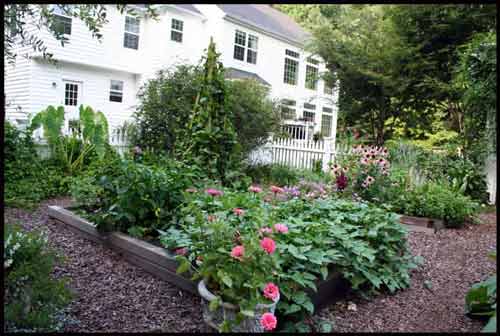
The malabar spinach is just beautiful. It’s wonderful in cooking, but you don’t really want to eat it raw. Imaging picking some leaves from your front landscaping. Hummm. Very green tasting.
Those are some zinnias that the butterflies just adore. And behind them are some Fordhook lima beans. My teenage son adores lima beans. In fact, he may be the only teenager in the world who adores lima beans. So, by God, I am growing him some lima beans.
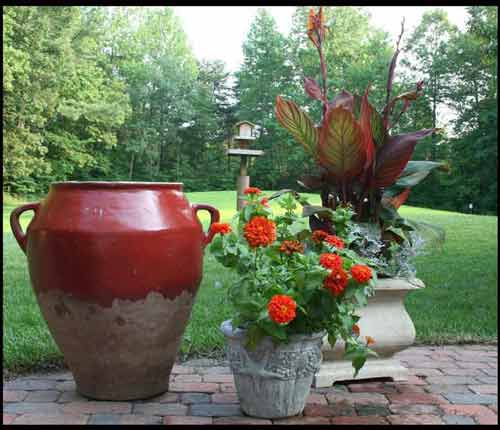
The container plantings are just coming into their own. Well, after all, I did hang on to those pansies from last fall a bit longer than I should have.
Good grief. It’s hard to wrap my mind around the fact that I’ll be planting fall containers again so soon.
Where does the time go?
Posted In: Chickens, Container Gardening, Gardening
Tags: containers, fall planting, malabar spinach, pansies


Hi! I'm Robin Ripley author of Wisdom for Home Preservers, published by Taunton Press. I am also co-author of Grocery Gardening. Bumblebee is about my life in rural Maryland, my garden and my love of food, my little dogs and pet chickens. You can follow me on Twitter, Pinterest and Facebook. Thank you for visiting!


 by RSS |
by email
by RSS |
by email
To get the latest Bumblebee posts in your email box, just enter your email address.
 Baking
Birds
Blogging
bluebirds
brother
bulbs
cake
chicks
daffodils
Dogs
Easter egg chicken
eggs
fall
Flowers
food
garden
garden seating
gloriosa superba Rothschildiana
Grocery Gardening
hellebores
hens
Johnny Cash
Lowe's Creative Ideas
Memphis
Meredith
Miss P
Moss Mountain Farm
My DIY Summer
P. Allen Smith
Palazzo di Pollo
Papillons
Philadelphia Flower Show
Polish chicken
potager
Recipes
rooster
Sarah
seasons
snow
Sophie
spring
T. Boone Chickens
Vegetables
winter
wisteria
Baking
Birds
Blogging
bluebirds
brother
bulbs
cake
chicks
daffodils
Dogs
Easter egg chicken
eggs
fall
Flowers
food
garden
garden seating
gloriosa superba Rothschildiana
Grocery Gardening
hellebores
hens
Johnny Cash
Lowe's Creative Ideas
Memphis
Meredith
Miss P
Moss Mountain Farm
My DIY Summer
P. Allen Smith
Palazzo di Pollo
Papillons
Philadelphia Flower Show
Polish chicken
potager
Recipes
rooster
Sarah
seasons
snow
Sophie
spring
T. Boone Chickens
Vegetables
winter
wisteria
